Week 4
Readings:
For this week's readings, we explored the concept of affordance and how it influences the way we interact with objects and designs. After reading the texts, I started questioning the objects in my everyday life and surroundings, especially those that confuse me or make certain tasks more difficult than they should be. I began asking myself whether these struggles were caused by poor design, a mistake in how the object was created, or even whether the confusion was intentional.
I think what I found most interesting was how these readings changed the way I observe and interact with everyday objects. Before, I never really thought about why certain things were intuitive while others were confusing, but now I find myself paying more attention to these details. Overall, I feel like I have started developing a relationship with the concept of affordance that I didn't have before, and it has made me more curious about how design influences our everyday experiences, sometimes without us even realizing it.
Have you ever encountered an object with poor or unclear affordances? If so, what would you change about its design to make it more intuitive and easier to use?
Video:
After watching Art, Design, Engineering: Making as Thinking by Sara Hendren and Lecture 3 – Use & Practice, I found the first video particularly interesting because it made me reflect on how we approach everyday objects and the role they plays in our lives. I think it is important to start thinking about how we can solve problems without always relying on new technologies.
We live in an era where technology is often seen as the answer to almost everything, and while I am not saying it isn't helpful, I think we sometimes overlook simpler solutions that might be just as effective. By interacting with everyday objects, understanding how they work, and experimenting with them, we might discover new ways to improve or adapt them without necessarily needing advanced technology. I also think that working directly with objects allows us to better understand their limitations and possibilities, which can lead to solutions we might not have considered otherwise.
The second lecture, Use & Practice, reinforced some of these ideas, although I felt that it overlapped quite a bit with the readings. Overall, both videos made me think about how making and experimenting can be a way of thinking in itself, and how sometimes innovation is not necessarily about creating something completely new, but about finding better ways to use what we already have.
Playful Interfaces
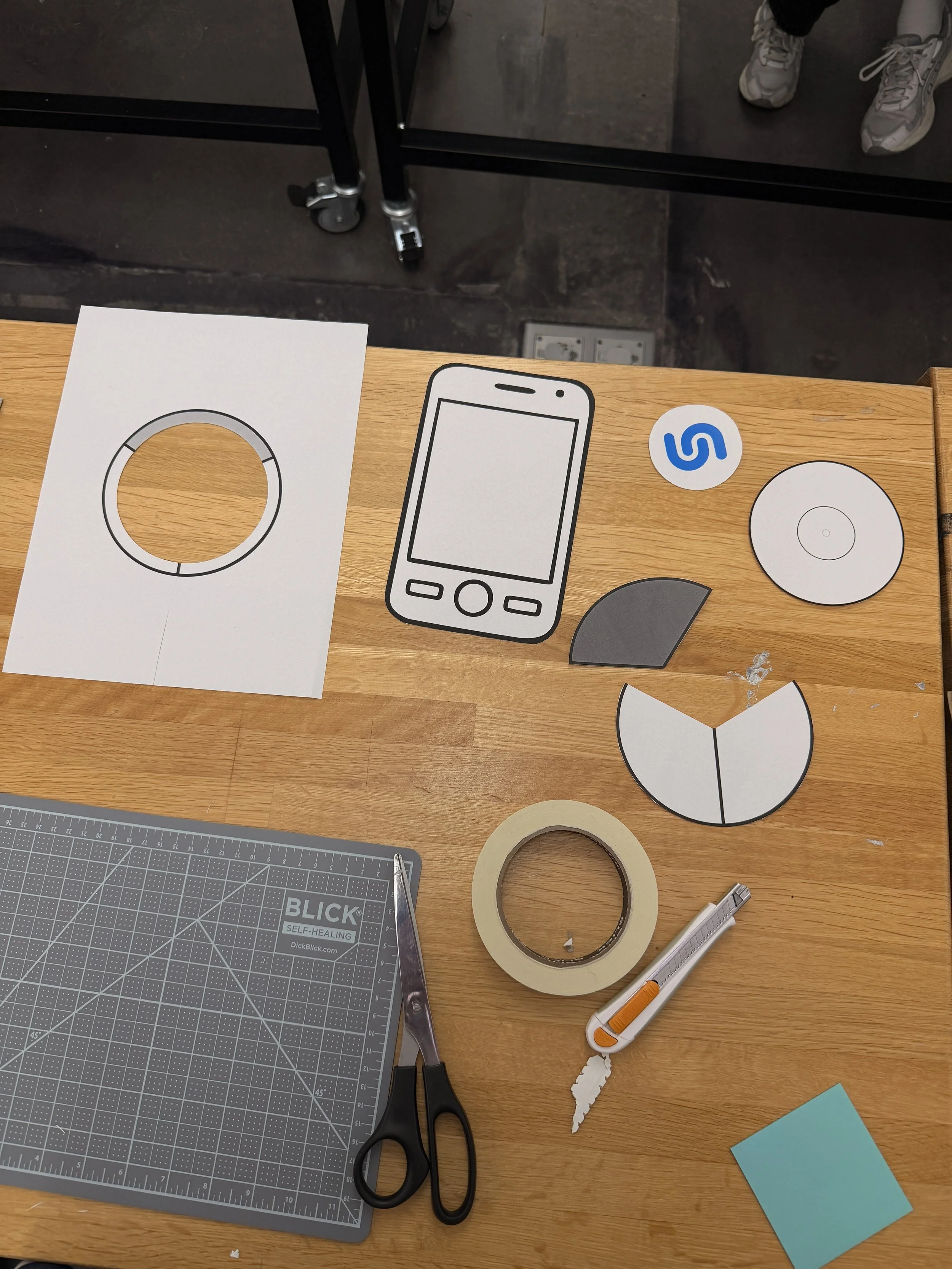
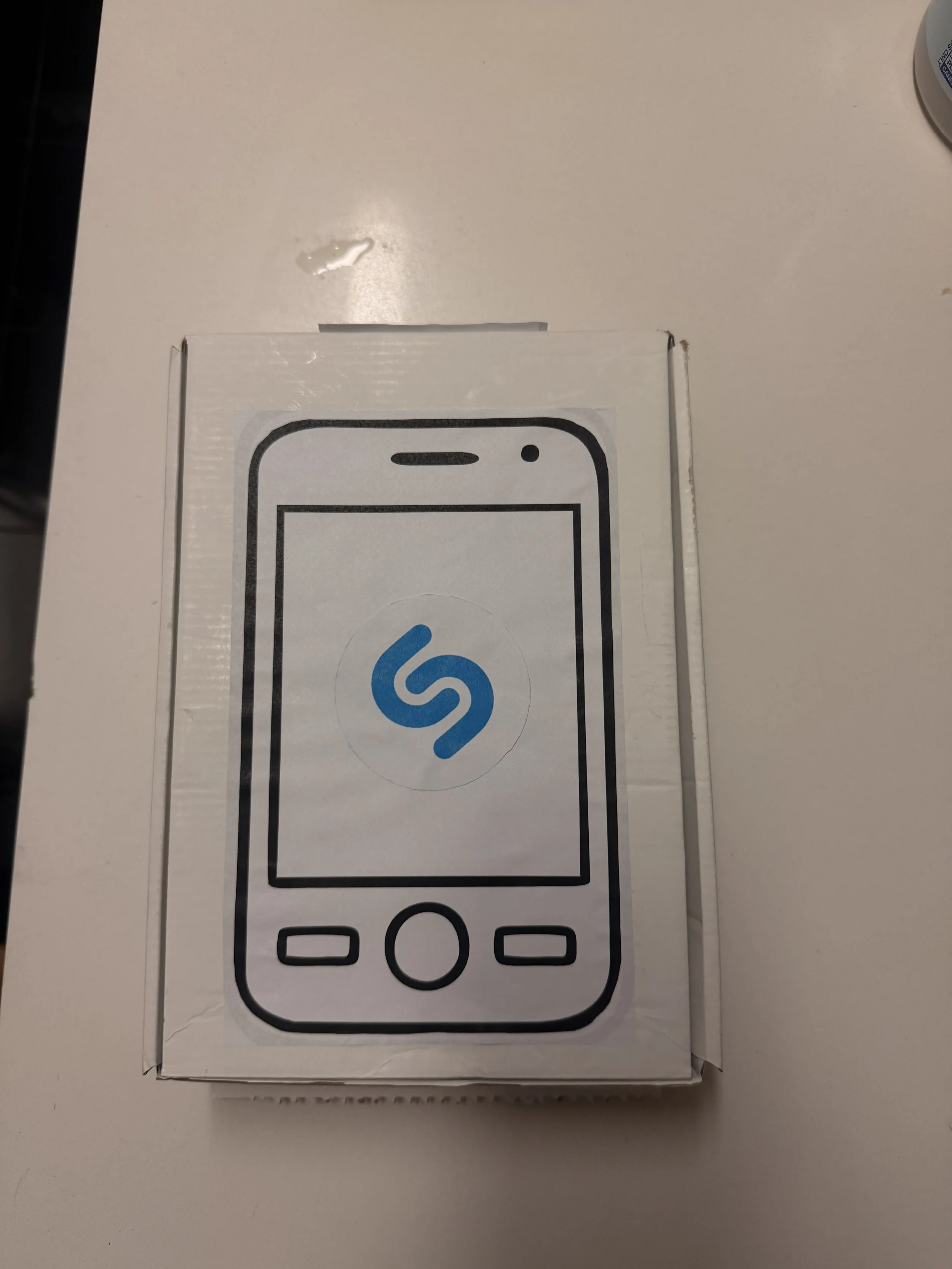
Concept 1: My first concept was to create a cardboard phone connected to a paper cloud labeled Shazam. From there, it would connect to a paper Spotify interface and finally to a community page, representing the process of discovering and sharing music.
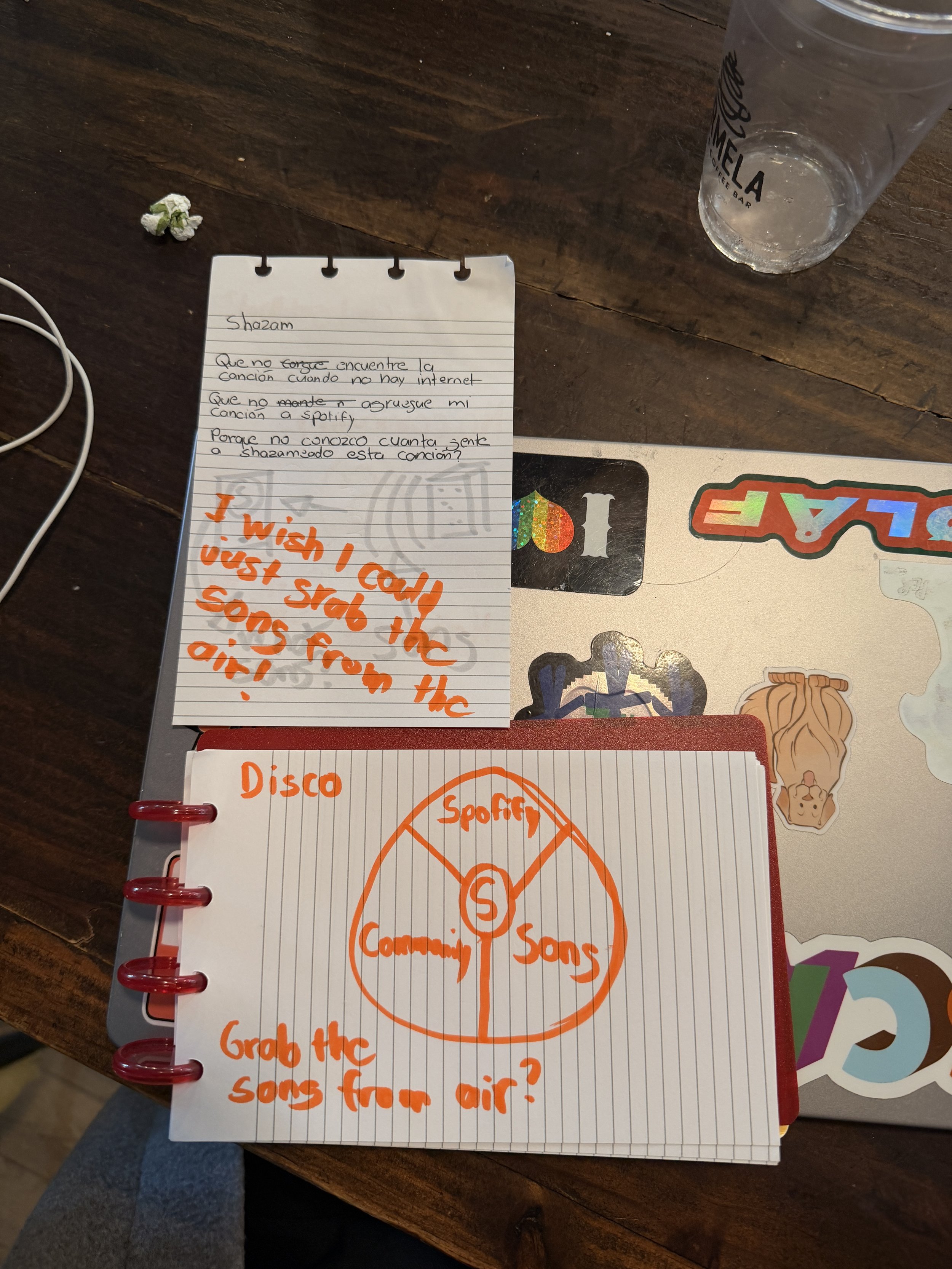
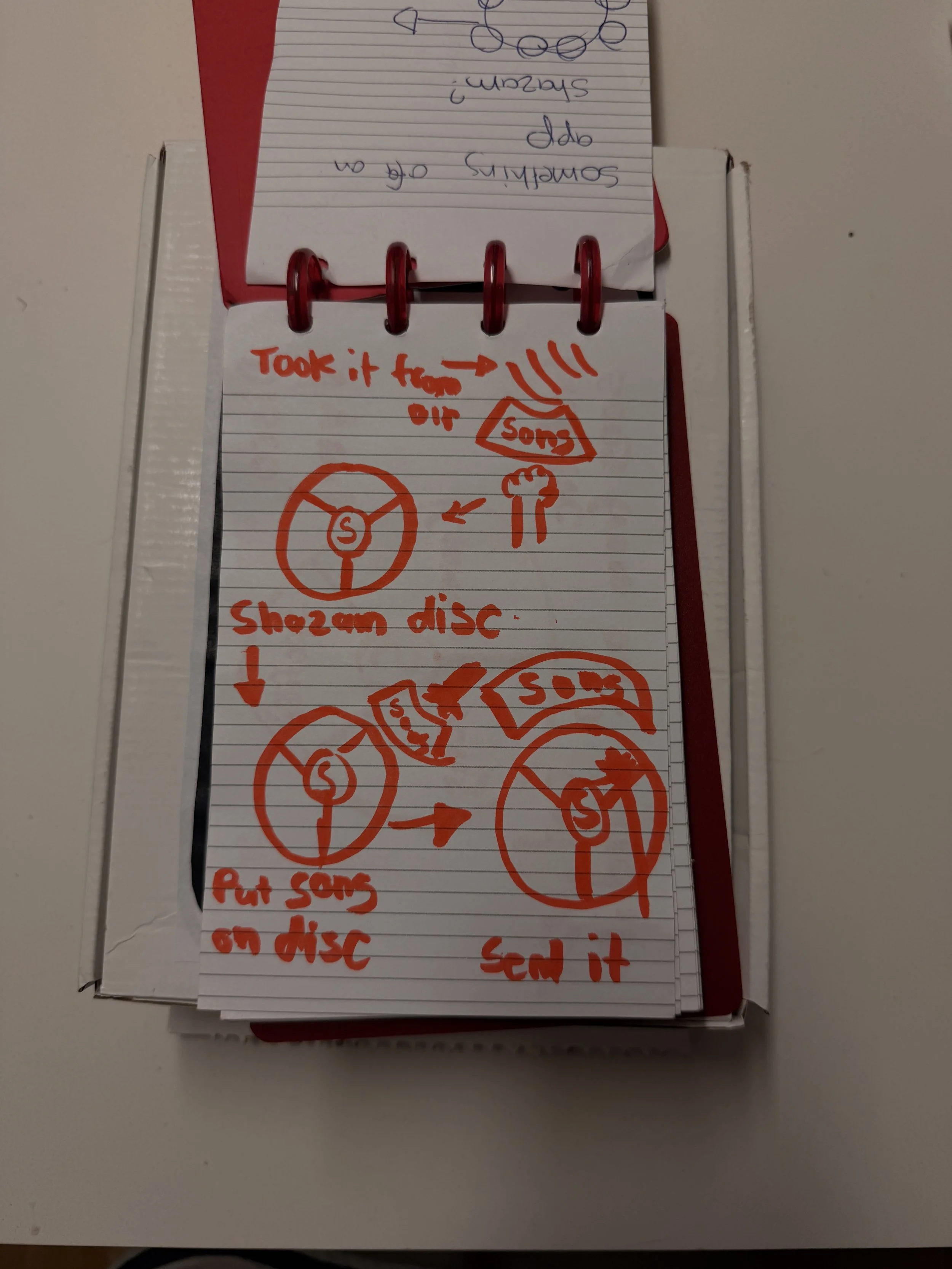
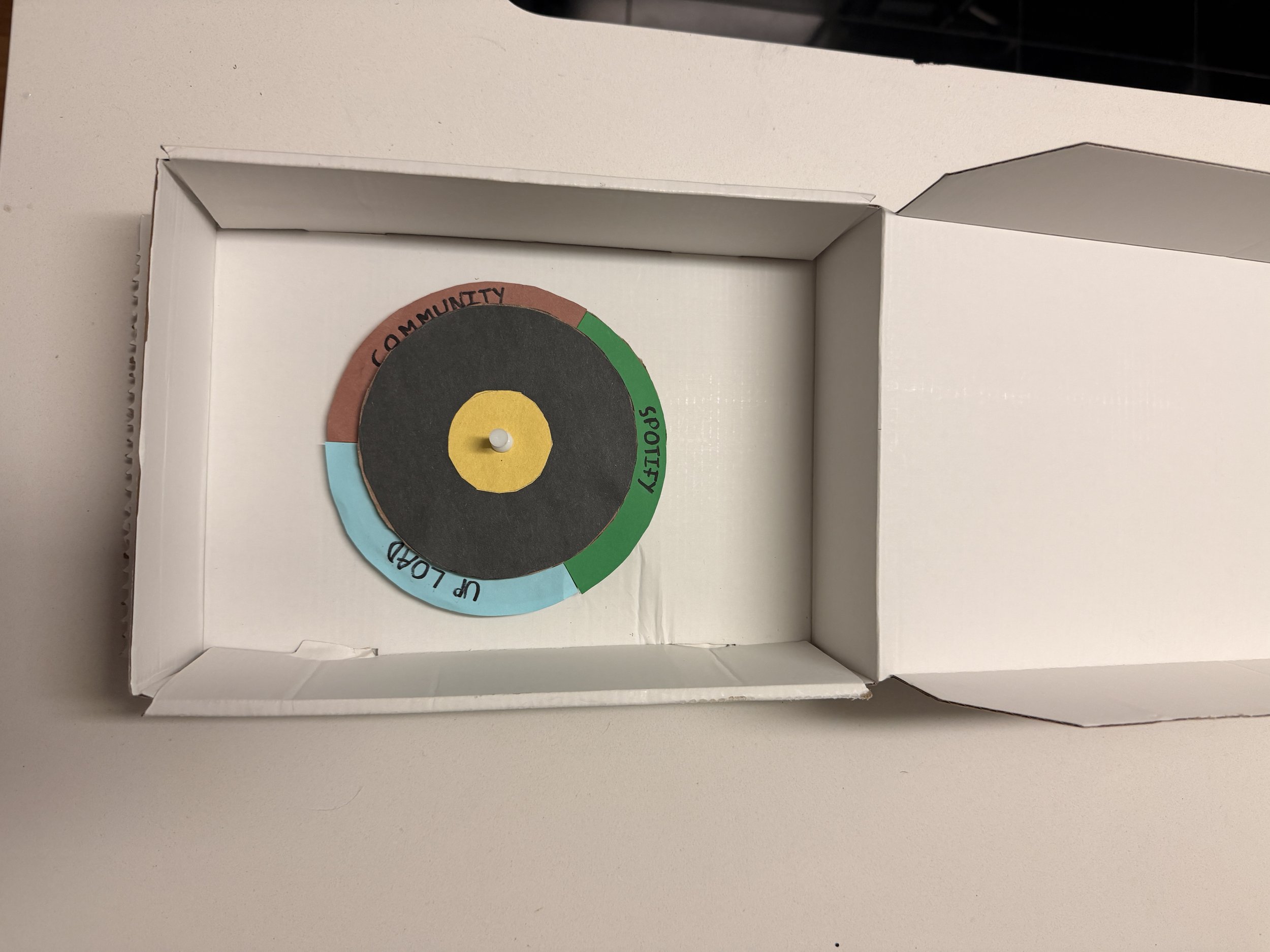
Concept 2: My second concept was to build a small box containing a miniature vinyl record representing a song. The box would have a rotating wheel with options such as Spotify, Community, and Upload, allowing users to physically choose where to send the song discovered through Shazam.
Love Letter Transcription
Shazam,
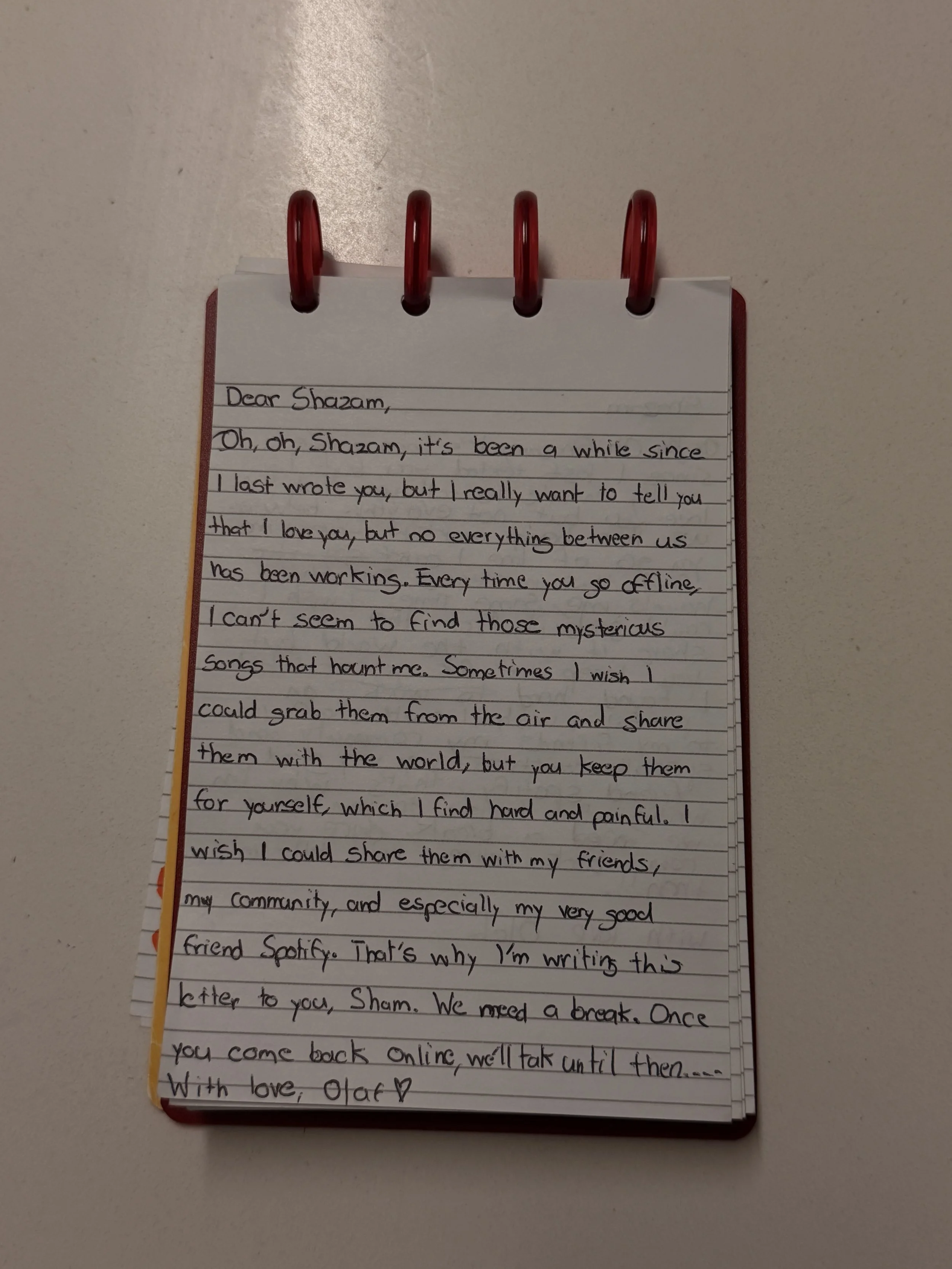
Oh, oh, Shazam, it's been a while since I last wrote you, but I really want to tell you that I love you, but not everything between us has been working. Every time you go offline, I can't seem to find those mysterious songs that haunt me. Sometimes I wish I could grab them from the air and share them with the world, but you keep them for yourself, which I find hard and painful. I wish I could share them with my friends, my community, and especially my very good friend Spotify. That's why I'm writing this letter to you, Sham. We need a break. Once you come back online, we'll talk. Until then...
With love,
Olaf
Process Book
1. Ideation
I started by brainstorming phrases and things I would like to say to Shazam. From there, I began exploring more abstract concepts rather than going with something too obvious or literal.
2. Sketching
I sketched out how the physical interface would work and how the different elements would interact with each other.
3. Designing
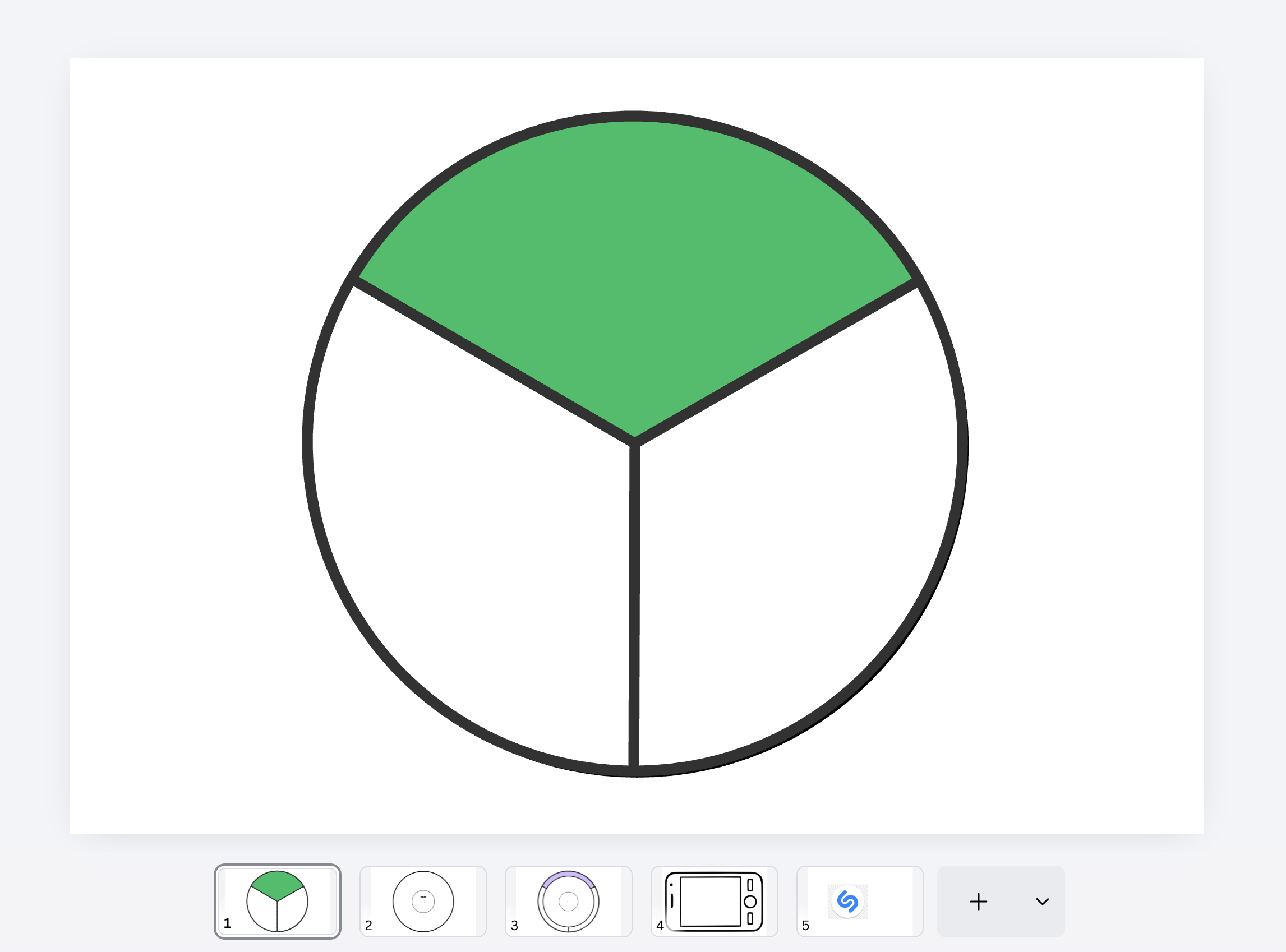
Using Canva, I created the templates I would use to build my physical prototype.
4. Building
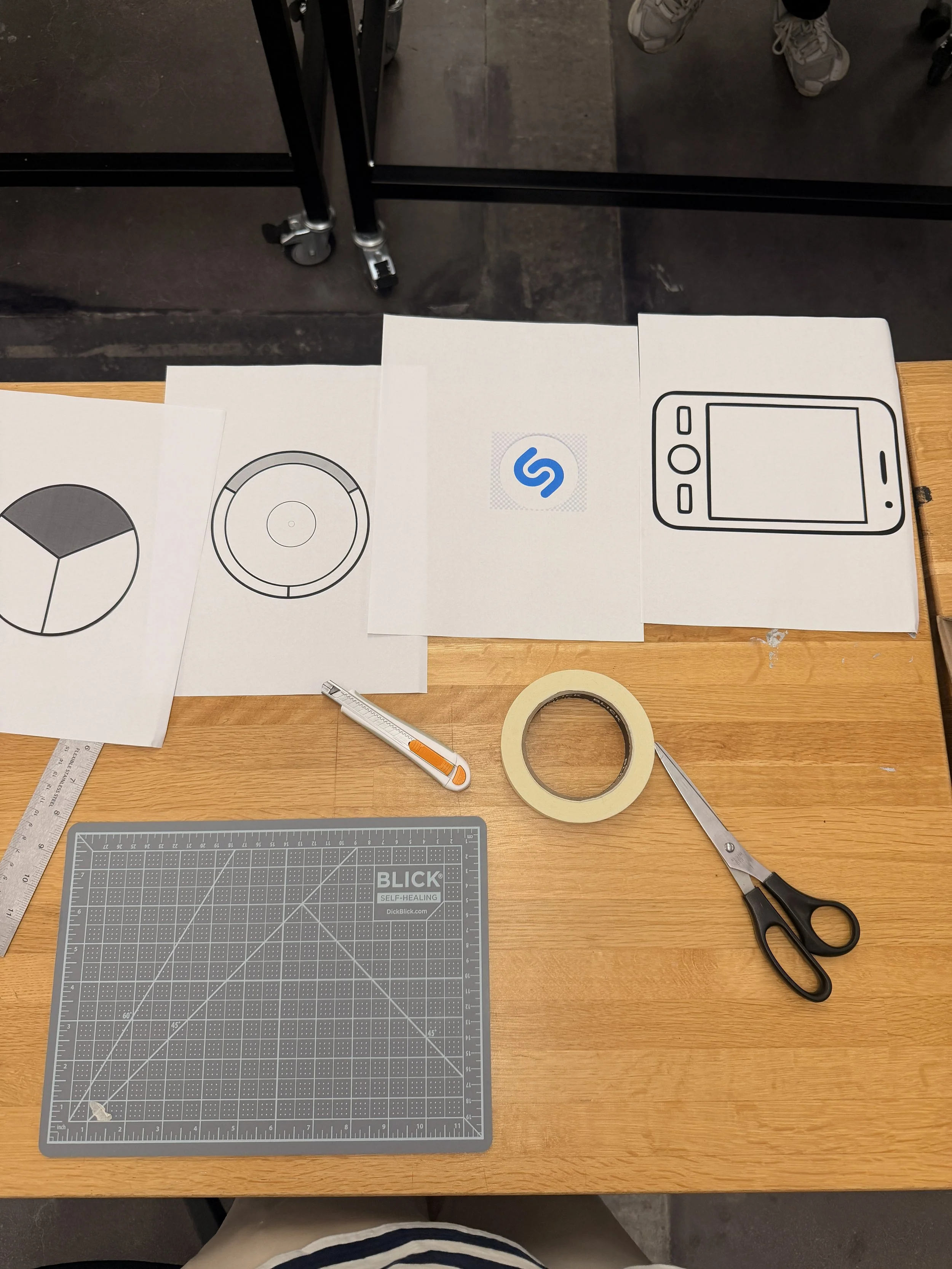
I printed, cut, and glued the different materials together, preparing all the pieces for the final assembly.
5. Assembly
Once all the pieces were ready, I put everything together to create the final physical prototype.
6. Writing the Letter
Finally, I wrote my letter to Shazam. I'm not sure if I was supposed to write it before starting the project, but throughout the making process, I kept thinking about what I wanted to say to Shazam. In the end, I felt that writing the letter afterward worked better for me, as the process helped me develop and understand my thoughts more clearly.
